
Category Archives: Gaming

An Open Letter to Rockstar and other Triple A Developers

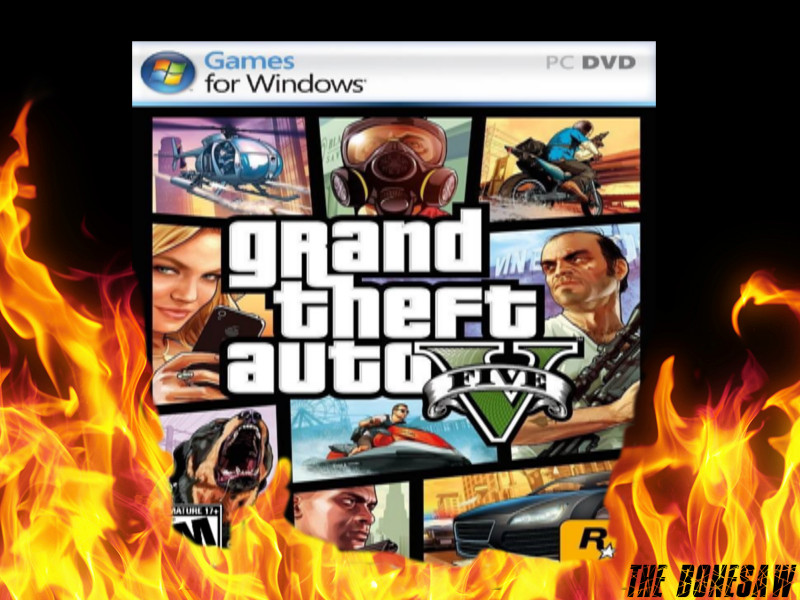
open letter to triple a and rockstarI recently picked up the PC version of Grand Theft Auto V, and I am hugely disappointed by it.

Having previously played the Xbox 360 version of GTA V, I knew how great the game was, and I was excited for all the new features being added to the PC release.  I waited in anticipation for months, as the release date was pushed back over and over again, but I said to myself, “It’s alright, better to have a great game with a later release”.  And then, the day finally came: GTA V on PC.

I planned on waiting a week or two before buying so I wouldn’t have to deal with release-week bullshit, but decided “eh what the hell” and bought it anyway the day after it came out.  I excitedly started the patcher and thus my first disappointment: I would have to wait over nine hours for the 50 plus gigabyte game to download.  I thought to myself, “It’s okay, this is a huge game after all.”  I decided to let it download overnight so that I could play it in the morning.

When the morning came, I got up, ate breakfast, and sat down at my PC ready to play.  What was I greeted by?  A five minute loading screen. “Okay, Okay, it’s not that bad,” I thought to myself. When I was finally able to play, I was greeted by the awesome “tutorial” bank robbery in the beginning.  I finished it, went through the couple of cinematics, and was soon on the first mission with Franklin.

I was, however; soon hit with my first crash.  “Well,” I thought, “I guess I should quit for now and go to work.”  This crash would be followed by several more throughout the following days, until a patch finally came out that seemed to fix it.

What the patch didn’t fix however, is the broken multiplayer.  GTA Online is perhaps the biggest selling point of GTA V: the ability to make your own character, start your own crew, do missions and heists with friends, and a multitude of other activities.  All of this would be great if I could actually fucking play it for longer than a few missions.  The lag is so bad, that a ride with a friend turns into us staring at each other in the car not moving while the server catches up.  NPCs teleport around, cars rubber-band into the sky and through the ground, and mission objectives don’t update.  Now, to be fair, I have been able to play for extended periods of time without lag.  However, the stuff that really counts-missions and heists, become pretty much unplayable depending on who the host is.

Now if this was a brand new game, I could forgive it.  After all, every game has some hiccups on launch week, so it is to be expected that a game as huge as GTA V would have some bugs.  There is one thing that makes this unacceptable:  THIS GAME HAS BEEN OUT FOR OVER A YEAR AND  A HALF.  GTA V originally came out for Xbox 360 and PS3 in September of 2013 (I remember, I was at the midnight launch), and GTA Online was released a few weeks later.  So it’s not like Rockstar didn’t know what they were doing.  Not only that, but the Xbox One and PS4 came out FIVE MONTHS AGO.  Rockstar had more than enough time to test server stability, playtest for bugs and crashes, and better optimize the game for PC.  THEY EVEN DELAYED THE PC RELEASE BY SEVERAL MONTHS.  There is absolutely no excuse for the sub-par quality of this port (READ: PORT; NOT BRAND NEW GAME).

This pattern of shit releases is not rare.  In fact, when a “triple A” game is released now-a-days, it is often EXPECTED for shit like this to happen.  Now what I want to know is when it became acceptable for a company to release a broken fucking game?  Years ago, if a game came out that was as buggy as most modern Triple A games are on release, it would be universally panned for being a shitty, unplayable game.  But now, for some reason, these games get a free pass because the company that makes them has been known to release good games in the past.

It’s as if their past achievements somehow validate any game they release in the future.

Not only that, most Triple A companies have a legion of fan-boys and apologists that try to make nothing but excuses for the shit games they put out.  “Oh how could you expect a game to be working perfectly on release”.  I don’t expect it to be perfect on release, but if I am going to spend $60 (or more in some cases) of hard-earned money on it, IT BETTER FUCKING BE AT LEAST PLAYABLE.

This problem is not exclusive to Rockstar.  The list of games that were broken on release is as big as the national debt these days.  Battlefield 4, Hardline, Assasin’s Creed Unity, Dragonball: Xenoverse, Sim City; the list goes on and on.

These aren’t games from tiny companies with two guys in their mom’s garage.  These are huge corporations with multiple studios around the world and hundreds or even thousands of people working on them.  In fact, the games made by two people in their mom’s garage tend to be HUGELY superior in terms of stability on release.

Why is it that games that have multi-million dollar budgets as big (or bigger) than Hollywood movies, with huge teams of some of the best (allegedly) programmers in the world, and (in some cases it seems) nearly unlimited amount of time to work on the game can’t ever get it right on release?  Why do players who spend $60 or more on these games have to wait weeks or months before they can actually play the game they bought?  And more importantly, why do people try to make excuses for this?

If I pay for a product, I expect to get my money’s worth out of it, and honestly, I rarely do anymore.  We as players, as consumers, should not be putting up with this.  I’d rather wait an extra year for a game to come out for it to be playable on release than get it early but broken and unplayable.  There is even less of an excuse for games that are ported to other consoles.  These are games that have been out, that all the code has been written for, and have already been optimized for something less powerful than the average gaming PC, but are still broken.

Here’s a radical idea developers: DESIGN THE GAME FOR PC AND PORT IT TO FUCKING CONSOLES.  There was a time when PC had the most cutting edge games, and the consoles got the watered-down, shitty ports.  Now, the opposite is true.  Triple A developers don’t give a shit about the PC gaming market anymore because the console market is worth more to them.  So instead of maximizing capabilities of a game and fully optimizing it, they essentially handicap it so it will run on consoles so they can make more money.

It’s now at the point where I will no longer buy Triple A games at full price because I know they aren’t worth $60 most of the time.  I’d rather wait six months to a year for a Steam sale, because I know that by then at least most of the bugs will be fixed and it will be somewhat playable.

Triple A developers have lost their passion for making games.  The industry has become much too corporate.  People who have no business running a game development company are at the helm, and they couldn’t care less about releasing a quality product as long as whatever they put out makes them money.  It makes me sad, knowing that an environment which I have always loved and felt at home in has become a barren wasteland of corporate interests.

It makes me sad to know that games from small developers with tiny budgets are far more playable than games that have bigger budgets than most Hollywood movies; but people still go for the big budget games just because of brand loyalty or past achievements. It especially makes me sad that people keep going for this system. They are so entrenched and blinded by big money that they can’t see that what the industry is pumping out these days would not have been acceptable 10 or 15 years ago.  My advice to anyone reading this: don’t buy Triple A games at full price. Read about what kind of problems people have been experiencing, and ALWAYS take mainstream gaming news reviews with a grain of salt, because half the time they are paid to overlook major issues.

Sincerely,

A Very Disgruntled Gamer

Elite Dangerous Review

Elite: Dangerous  is a space trading and combat sim made by developer David Braben and Frontier Developments.  It is the first game in the Elite series since 1995’s “Frontier: First Encounters and its safe to say the wait has been well worth it.

The game takes place in a 1:1 scale model of the Milky Way Galaxy, with  thousands of real star systems to visit( including our own) and billions more procedurally generated systems based on scientific models.  Elite can be played both offline and in a massively-multiplayer fashion in which players can interact with each other in number of ways.  A crowd-funding campaign for the game was started back in 2012, and after several stages of development and testing; the full release came in December of 2014.

Like many space sims, the player is able to control every aspect of their ship, from lights and landing gear, to power regulation of the various systems.  Unlike past space sims, Elite allows the player to look around the cockpit of their starship and actually interact with the various screens and HUDs present.  Almost any ship function from targeting to silent running can be manually controlled by the player through this method, adding a level of depth that makes Elite unique among current space games.

Elite: Dangerous, akin to many of its predecessors, is completely open-ended.  Players have can choose a number of different ways to make their mark in the galaxy, from legitimate activities like mining and trading to the more underhanded tactics like piracy and smuggling.  One of the best aspects of the trading system is that every system has its own economy which is completely player driven.  Market prices depend on supply and demand, and smart players will work out complex trading routes to maximize their profits.  Star ports also have “bulletin boards,” which allow players to take missions to assist various factions that operate out of the system.  Completing these missions not only means both credits and renown for the player, but also affects other missions available to other players.  For example, if one faction gains more ground in a system than another, it will change the types of missions available to players.

Perhaps the most impressive thing about Elite: Dangerous is its tremendous scale..  It is impossible for any one person to explore every system, even if you spent  seconds in each one.  Players can spend hours exploring only to find that they have only traveled a few dozen light years away from where they began.  Exploration is actually a great way to make money starting out, as any scan data from stars or planets can be sold to stations that are 20 light years away or more for big money.  While that seems far, every ship is equipped with a “frame shift drive”, which allows for speedy travel from system to system.  The FSD is essential even for traveling to different planets within a system, however, as traveling at sub-light speeds could take hours, days, or even weeks of real time in some cases.  The vastness of the galaxy in Elite may also be a detractor for some, as players can spend  hours flying without encountering much more than a single star with no planets or stations.  Elite lives up to its “simulator” label; just as in real life, space is big and mostly empty.  There is also no way  to visit the surface of planets- only the stations that orbit them.  While some may find this disappointing, it is understandable considering for Elites budget and time frame.

Elite also may be a bit tricky for those without a controller or flight stick, as ships are able to fly not only up,down and side to side, but forwards and back as well.  Those who play flight sims may be a little thrown off, as normal rules of atmospheric flight don’t apply in the vacuum of space.  New players would be better suited to treating their ships as fast moving submarines rather than “flying machines”, as space is more a vast ocean than an open sky.  The game does, however, offer full controller and flight stick support, and even has built in options for Saitek joysticks, a flight industry standard.

Overall, Elite has enough variety to keep both lovers of the space sim genre and newcomers entertained for hours on end.  It is easy to simply get lost in the beauty and vastness of this 1:1 scale model of our galaxy, and exploration alone will keep many occupied.  Some players may have issues with the open-ended nature of Elite: Dangerous, as the game drops the player in without much direction, albeit with an extensive tutorial if they choose to play it.  The various jobs and activities are both enjoyable and add depth, and the ability to look freely around the cockpit makes Elite feel even more real.  With future updates to include the ability to walk around ships and star ports, as well ships that require a multi-person crew, Elite: Dangerous is definitely worth checking out.

Throwback Thursday: The Legend of Zelda – Majora’s Mask 3D Review

In 1998, Nintendo redefined the action/adventure genre when they released the first 3D installment of the long running Legend of Zelda series, Ocarina of Time. The game was nearly flawless when it came out, although it hasn’t aged as gracefully as others, it remains one of the greatest – if not the greatest game of all time.

Two years later, Nintendo blew the competition away again when they released Majora’s Mask, one of the only direct sequels in the Zelda series. While retaining the awesome feel of Ocarina, Nintendo added a whole new dimension to the gameplay with the introduction of masks – each with its own specific attribute. This, coupled with the ability to transform into a Deku, Zora, or Goron, turned a game that used the same assets and engine as Ocarina into a completely new and exciting experience that would be loved by fans for years to come.

After the success of Ocarina of Time 3D, Nintendo began hinting at a Majora’s Mask HD remake, using some not-so-subtle clues in both Zelda: A Link Between Worlds and the newest installment of Super Smash Bros. Nintendo eventually came out and stated the obvious, that they were indeed making Majora’s Mask 3D for the 3DS. After months of anticipation, the game has finally arrived; and it is everything Zelda fans have hoped for.

While it is simply a remake of the original, Majora’s Mask 3D is not a “port” per say. The most obvious improvement is the graphics, which have undergone a major overhaul. Textures and models look gorgeous, and animations have been greatly smoothed over and improved. The moon has gone from silly-looking to terrifying, which really adds to the dread of impending doom that is the main theme. All of the characters look great, and are not nearly as “polygonal” as they were in the original N64 title.

Some of the cutscenes have also been improved. For example, the “business scrub” cutscene that would occur every time the player walked by his deku flower in Clocktown has been shortened, which is a welcome relief to all those who would accidentally walk to close while strolling through South Clocktown.

Aside from the graphics, certain gameplay tweaks have made Majora’s Mask so much more streamlined. There are now four item slots as well as a separate slot for the ocarina. Anyone who has played the original will remember the monotony of constantly switching items out of the three allotted slots in that. The addition of motion-controlled aiming is another great improvement over the original, where it could be almost impossible sometimes to line up that perfect shot. The Bomber’s Notebook  has also been greatly improved. The player can now set alarms for when certain events are to occur. The Song of Double Time has also been improved, allowing the player to select the exact hour they want to warp to, unlike in Majora’s Mask 64, where it went in 12-hour increments.

There are a few things that some veteran players, however, may not like. One is the difficulty, which has been lowered a little bit from the original. Majora’s Mask 64 was notorious for its difficulty. Nintendo have altered that slightly, making the boss fights easier and adding some extra in-game hints. Several side quests have also been moved around, which may throw off veterans of the N64 version.

One of the biggest pet peeves is Zora Link’s swimming, which has been nerfed. In Majora’s Mask 64, you were able to swim fast kind of like a dolphin, and if you hit the “shield” button, a blue aura would appear around you that allowed you to damage enemies in the water. Now however, you can only “dolphin swim” when doing the blue aura attack. The basic swim action is now not nearly as fast as it used to be. Zora Link simply meanders through the water a bit faster than he would as regular Link.

This is a disappointment, as one of our favorite things to do in Majora’s Mask 64 was swim around the ocean at high speeds and see how high we could jump out. Now you can only do this as long as your magic meter lasts – which isn’t very long as the shield ability takes a lot to use.

Aside from these minor setbacks, Majora’s Mask 3D is still a great title. Nintendo have really gone above and beyond to improve what they could. It seems that they have listened to a lot of the player’s complaints over the years, and have tried their best to fix those issues. With all of these HD Zelda games coming out, we are excited to see what Nintendo has cooked up for the next new installment in the series, as well any more remakes they have planned. As for Majora’s Mask 3D, it is a definite buy for both veteran players and new fans of the series alike.

5 Star Wrestling Review

On the surface, Serious Parody’s “5 Star Wrestling” isn’t even a B+ player. It’s uglier than Bastion Booger and its load times sometimes make Haystacks Calhoun look like Juventud Guerrera.

But just like former WWE Champion Daniel Bryan, it’s got something special.

It’s got heart- and “Greg Hearty.”

The more you play this game, the more you’ll see that its gameplay mechanics and tiny odes to classic games the likes of “WCW/NWO Revenge” and “WWF No Mercy” are a perfect combination of wrestling goodness.

Continue reading at examiner.com.

Throwback Thursday: Yu-Gi-Oh! Forbidden Memories

Yu-Gi-Oh! Forbidden Memories Cover.png

Released on the original Playstation during its final days, Yu-Gi-Oh! Forbidden Memories capitalized on the latest card game craze during its peak in video game form.

While the quest was monotonous, it was at least straightforward: defeat everyone in your path as Yugi traverses from his past and current lives in order to save the world.

The real fun was the game itself. For its time the graphics were quite good and simple, bringing the beloved card game to life albeit with alternative rules. Players could fuse monsters with not only magic and trap cards, but without the use of Polymerization. It is unknown why this was inserted into the gameplay, but it makes the game much easier at times, especially since the player does not have very good cards for a long time. An additional rule that was put into play was the use of “guardian stars.” When a player sent out a monster they would have to choose one of two guardian stars that would either put them at an advantage, disadvantage, or stay the same depending on the guardian star their opponents monsters have.

Even the animated series didn’t have rules that bizarre.

Most of the game is done in “Free Play” mode, as the player only receives new cards once they have beaten an opponent. If they should lose during the campaign, it’s game over. The free play mode is where they’ll want to go sharpen their skills and get better cards to upgrade their deck for the campaign. Since the cards you are rewarded seemingly come at random based on your speed and performance, the player will spend most of their time in free play, which is not necessarily a bad thing as the story is actually very short.

At the end of the day, Yu-Gi-Oh! Forbidden Memories came down to the heart of the cards as it opened a new way to experience the game, turning out to be one of the best time killers one could ask for. If you weren’t a fan of the card game, you could still enjoy this game for hours on end.

Warframe (PC) Review

Warframe is a cooperative free-to-play third person shooter/RPG with the feel of an old-school dungeon crawler.

The game takes place in the far future where the Solar System is overrun with several different races vying for power. You play as a Tenno, essentially the last remnants of humanity that use different armors (aptly named warframes) to do battle with the warlike Grineer – the technologically advanced Corpus, and the biological Infestation. After being awakened by a woman known as Lotus from a cryogenic sleep, you find yourself struggling to regain your lost power while trying to survive the war-torn solar system.

The main objective of Warframe is to get loot (a lot of it) and level it up. Missions are designed with maximum re-playability in mind, with no two levels being exactly the same. Warframe uses a procedure generated level design based on various tile sets, much like the dungeons of Diablo or Path of Exile. This is good because you will be playing the same levels a lot.  Certain rare resources are best acquired by fighting specific bosses, leading to many replays of specific boss battles in order to farm said resources. While it is possible to buy new weapons, Warframes, keys and other items for real money, it’s not required. Pretty much everything in the game can be unlocked by grinding, save for cosmetic upgrades and more inventory slots.

Coop multiplayer is really where the fun is at in Warframe. Up to four players can fight together in a variety of different mission types from straight-up exterminations to spy missions that require some twitch-based puzzle skills. Players can also form clans and build “dojos”, which are essentially giant space stations for clan members to meet. In the dojo, clan members can duel, trade items, research various items and weapons, or just hang out. Other than dueling, players can also enter PVP areas and fight in teams against other clans.

Movement in Warframe is perhaps one of the best aspects of the game. Your Tenno can run, jump, climb up walls, slide, and perform various other ninja maneuvers. The wall running and jumping isn’t just for show, as many levels require some platforming to advance. The combat is also extremely fluid; switching from ranged to melee is very streamlined, and there are many different weapons to choose from. Each weapon (as well as your warframe) can be leveled up and modded to make them more powerful. Mods can also be combined in different ways to make weapons even more devastating than normal.

In addition to its gameplay, Warframe has a rich lore and aesthetic that is unlike any other game out today. The concept of space-traveling ninjas in the far future is a very odd combination, but it works great. As you progress through the game, you learn more of the back story of each warframe, but also of each enemy type you encounter. The fact that it takes place in our own solar system (albeit well after humanity has largely gone extinct) makes for a new take on the whole post-apocalyptic/scifi genre. This isn’t a world where humanity is barely getting by in a barren wasteland. The Tenno are more of a shadow organization, barely a blip on the radar in this future where aliens rule the solar system, fighting each other for power. You are not here to “reclaim Earth” or help restart the human race in any way, but merely to survive in the chaos our solar system has fallen into.

While there are many great aspects of Warframe, it does have a few downfalls. It is still being actively developed, and so there are some crazy (often hilarious) glitches that happen occasionally. It is also extremely grindy. You can spend hours trying to get one resource without finding any. Having said that, developer Digital Extremes have really gone above and beyond to improve the game from what it once was, adding new maps, enemies, events, and greatly improving the user interface. While not perfect, it is certainly much more polished than it was a year ago, and new content (free content that is) is constantly being implemented.

Overall, while not the greatest game out today, Warframe is certainly very fun. It can get a bit tedious after a while, but if you can find some friends to play with, that definitely helps cut down the boredom caused by grinding for resources. If you are looking to play a game similar to Destiny but only have a PC, than look no further than Warframe. In many ways, Warframe does right the things that Destiny failed on, and while it may not be quite as vast as Destiny, Warframe certainly offers hours of enjoyment to any RPG/dungeon crawler fan.

Throwback Thursday: Mega Man X

In a nutshell, Mega Man X was one of the most enjoyable games of all time.

Released in Japan in 1993 and 1994 in North America, Mega Man X was Nintendo’s introduction to everybody’s favorite little blue robot on the Super Nintendo Entertainment System.

In addition to the unique level design, graphics and features only 32 bits could offer (at the time), Mega Man X added new levels of depth to the character and a slew of new weapons as he defeats eight robot masters and their leader in the distant future.

For one, all of your weapons were given bigger, badder upgrades when you either collected them from the capsules Dr. Light would hide, or you would gain a supercharged shot several moments into the final stage after fighting the Boba Fett inspired Vile for the second time (with a little help from X’s partner Zero).

In a post-apocalyptic world (a much grittier story than usual), X would fight Mavericks – more advanced robot masters than he was used to, as well as their leader Sigma (and his equally annoying cat). Some of the more memorable bosses and levels were Army Armadillo, Launch Octopus, and Storm Eagle; whose level soundtrack video game shredders Powerglove would cover on their “Total Pwnage” EP.

Speaking of music, Mega Man X continued the blue bomber’s tradition with one of the best soundtracks the franchise has to offer. The epic midi made you feel like the righteous man you are, embarking on an all or nothing quest for the good of mankind.

Mega Man X is a treasure for everyone, taking the platforming/beat-em-up elements that Mega Man is famous for but turning it up a notch. It’s a game that will never stop being fun no matter what new console is available or what they can do. At the end of the day, sometimes people want something simple and that’s what makes this game immortal.

Dying Light (PC) Review

Developer Techland, (the same company that brought us 2011’s Dead Island) has presented us with a new survival horror game for the PC titled Dying Light.

While retaining much of the RPG elements of Dead Island, Techland manages to refine and expand upon the loot/skill based system of their previous franchise, making for a much more enjoyable open-world experience.

Perhaps the biggest new feature is the new parkour system.  Unlike Dead Island, where movement was fairly restricted, Dying Light gives the player the ability to go essentially anywhere they can see.  What sets the climbing and free running elements apart from similar games like Assassin’s Creed is its natural flow.  One of the biggest issues with Assassin’s Creed’s free running/climbing mechanic is the level design.  While it was a fairly great system, buildings clearly have things that you are supposed to climb on, be it weird wooden planks sticking out in nonsensical locations or the random bricks that just happen to be out of place in a perfect climbing line.  Dying Light’s level design is much more subtle, making the parkour elements of the game feel a lot more natural and realistic.

The world of Dying Light is massive.  Dozens of side quests and little distractions will keep any fan of games like Skyrim or Fallout occupied for hours.  Not only is this world huge, it is also pretty.  From the picturesque scenes of the resort town to the grittiness of the slums, Techland definitely spared no expense on creating the world of Dying Light.

One of the best features of Dying Light is the day/night cycle.  During the day, zombies and the various other infected – while tough, will eventually become more of a nuisance than a threat.  It isn’t until the sun goes down that the game gets really difficult, with the standard zombies getting a buff and the appearance of the vampire-like Volatiles( monstrous creatures that can easily chase you down and murder you, even across rooftops).  Going out at night, however, does have its benefits.  The player will receive a boost in all experience earned, as well as a chance to score some loot drops without having to deal with the dangerous uninfected enemies.

Overall, Dying Light is a breath of fresh air in the zombie survival genre.  From the in-depth crafting and loot system to the amazing free running/parkour, Dying Light has something for fans of both the RPG and action-adventure/platforming genres. Techland took the extra time to release Dying Light and it shows.  The amount of polishing put into the game is rare for most AAA releases these days, making Dying Light the proverbial god among insects in the current market.

Trailer Feedback: Five Nights at Freddy’s 3

Although we just got Five Nights at Freddy’s 2 a short while ago, programmer Scott Cawthon has already been hard at work continuing his legacy.

Make no bones about it, this game is going to scare the hell out of people.

The cinematic graphics are fantastic and vibrant without the animatronics having to do much at all. We get the immediate sense of dread.The haunting music also does a good job of building the trailer. We get shots of the restaurant and the animatronics. Bonnie the Bunny’s eye slowly rolls towards the camera in chilling fashion.

The real head-scratchers here are in the text. “He will come back, he always does, we have a place for him” all appear in yellow before turning to red. Who are the possessed animatronics referring to? The killer of the five lost children the series story subtly revolves around? The phone guy from the previous games? Or is it you, the night guard?

We then get a shot of the creepiest thing these games have delivered us. The twitching golden animatronic (being called “Golden Bonnie” and “Salvage” by fans) who’s eyes looks more man than machine. And to make things worse we see what looks like gameplay footage of the creature skulking into the guard room, staring into the camera and emitting a shriek before the title screen appears.

Just when you thought it was safe to go back to Chuck E. Cheese…